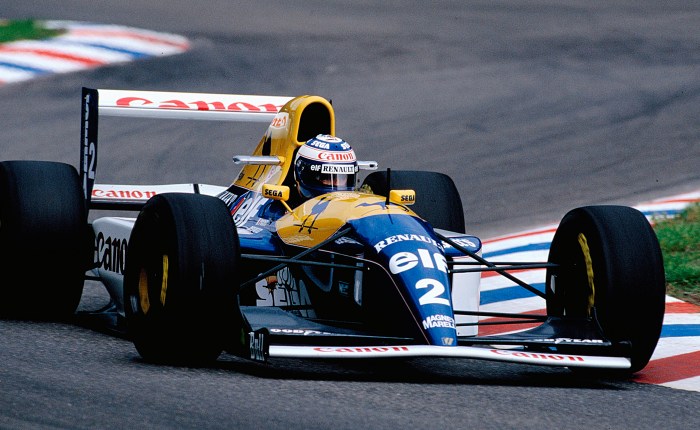
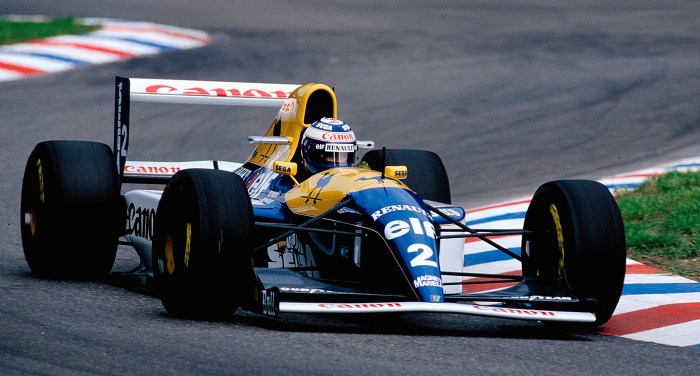
The chequered flag at the Australian Grand Prix, in Adelaide on November 7, will signal not only the end of the 1993 Grand Prix Season, but as Rob Williams reports, the end of an era in which computer technology has dominated Formula 1 racing.
The 1992 and 1993 Grand Prix seasons have seen computer technology become the driving force behind most of the innovations that have allowed Frank Williams’ Canon Williams team to dominate the Formula 1 constructors’ title. Leading edge telemetry systems, active suspension, computer-assisted power steering, computer controlled anti-lock braking systems (ABS), electronic transmissions and traction control have become de rigueur in Formula 1.
‘The track engineer in front of his screen is as much part of the race as the driver behind the wheel,’ according to Denis Chevrier, the engineer in charge of Alain Prost’s engine.
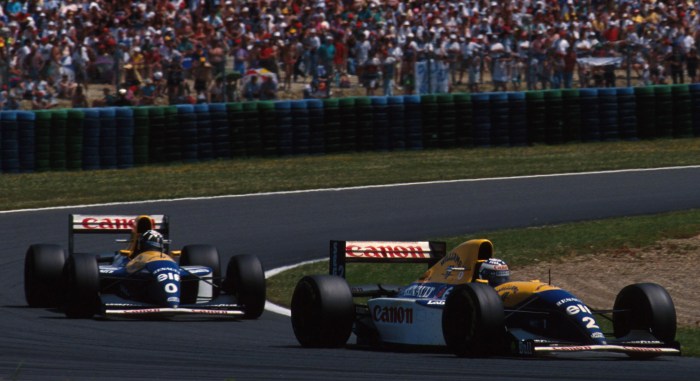
Today, the Canon Williams/Renault team is without doubt the dominant force in Formula 1. A look at the team’s technology and that of its technology partners provides an insight into the very best technology Formula 1 has to offer.
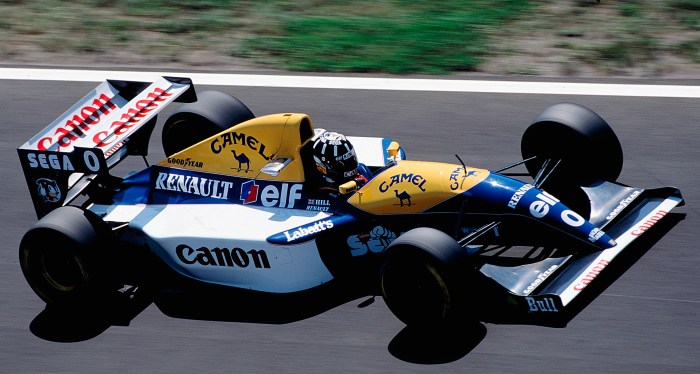
Computer technology, sophisticated electronics and telecommunications have been skilfully blended into a sophisticated telemetry system with the capacity to record vast amounts of data on each aspect of engine performance, suspension, aerodynamics, brake pressure, G-forces and so on. This information is transmitted to purpose built telemetry stations in the pits, where the data is analysed by teams of engineers surrounded by some of the most powerful computer systems currently available.
During the mid-1960’s a Firestone engineer, Dave Trevett, modified an aircraft flight data recorder to record suspension movement, lateral and longitudinal G-Forces and other rudimentary parameters during practice and test sessions. The data was printed on strips of paper that would later be analysed by engineers using a pencil and ruler with notations being made in the margins of the printout. Scuderia Ferrari made extensive use of this technology during the late 1960’s.
Today, beneath the stunning yellow-blue-white livery of the Patrick Head and Adrian Newey designed Williams FW15C, Magneti Marelli sensors are connected to the multitude of systems and components that are monitored by the Renault and Canon Williams engineers. The data is sent to a Magneti Marelli data acquisition unit, mounted behind the driver, which transmits the encrypted data via a HF radio signal to the Bull HTX 3D telemetry workstation in the pits. Up to half a megabyte is transmitted in under two seconds.
Parameters such as speed, engine revs, injection time for each cylinder, oil and coolant temperature, hydraulic pressures, fuel consumption and pressure on aerodynamic surfaces are among those transmitted by the onboard computer. Engineers can assess the data while the car is on the circuit. Adjustments are made on a portable computer and downloaded to the Engine Management Unit (EMU) when the car is next brought into the pits.
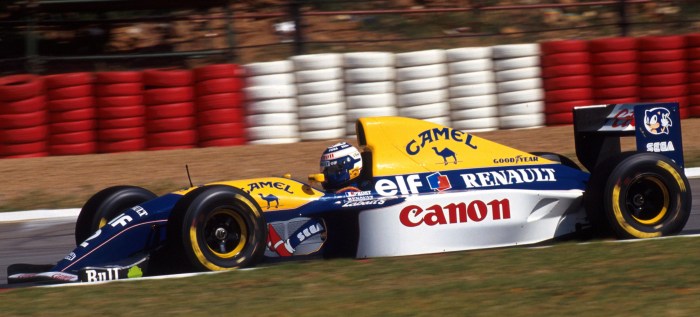
The speed of the computer systems processing the telemetry data is critical. With a lap time of around one minute, all available data must be processed in only a few seconds. The results are then displayed almost immediately to give the engineers maximum time to analyse the output and make decisions on necessary changes. Bull Information Systems provides the hardware and software for all aspects of the engine development cycle and most aspects of the testing and tuning of the chassis.
Bull (the French based computer giant) and Renault have entered into a partnership to computerise the engine test benches at Renault Sport’s Viry-Châtillon plant. It is here that the RS5 V10 engines are built and tested before being delivered to both the Williams and Ligier teams.
Sensors fitted to various parts of the engine transmit data to the Central Acquisition Unit. Processing and display are handled by the Bull RISC-based workstations which have been specifically designed to run input/output, numeric and graphics intensive scientific and industrial application software. The Viry-Châtillon systems are able to store and process huge amounts of data over time and provide the engineers with both a display and hard copy of both specific measurements and trend curves.
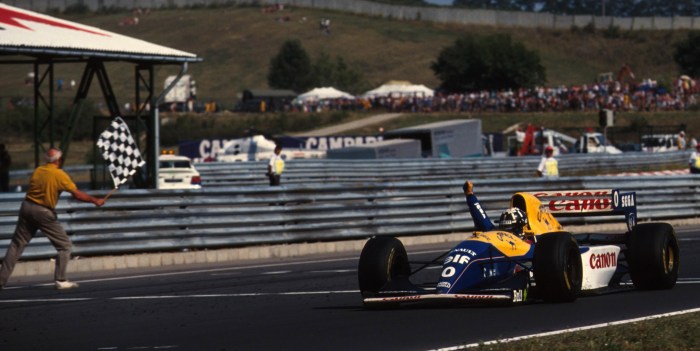
With regulations limiting the number of fresh engines used by a two car team during a season, it is vital to know when an engine has reached the point at which it will fail.
Elf, a long time supplier of racing fuels and lubricants, has recently commissioned a mobile analysis laboratory to analyse fuel and oil samples from the cars during race preparation. Information from the analysis equipment is downloaded to a Zenith Data Systems laptop for assessment by the engineers.
‘The advantage is in having a computer that can store the last two years analyses,’ notes Valerie Jorquera, Elf’s technical manager. ‘The analyses are studied from a statistical point of view, which means we can now calculate with sufficient accuracy the moment an engine is likely to give way.’

On sale for a limited time! Ice Fortress (A Jack Coulson Thriller) by Robert B. Williams
The use of computer technology extends well beyond the engine itself. The new Williams FW15C chassis is practically bristling with onboard chip-based control systems. The wiring looms are manufactured to military aerospace specifications and over 800 man-hours are required to assemble and install the cars electronics.
Probably the best known weapon in the Williams arsenal is the Williams Active Suspension. One of the traditional problems with racing cars is maintaining aerodynamic downforce despite the changing attitude of the car as a result of changes in the car’s speed. Max Nightingale, a Williams engineer reveals how it works.
‘With reactive suspension, the distance between the car and the ground can be optimised to suit the car’s speed. The computer is connected to servo valves which convert the electrical signal from the computer into controlled oil flow. This adapts the suspension by pumping oil into or out of the shock absorbers.’
The software that controls the servo valves must continually compensate for the ground effect/speed relationship, changes in the circuit surface and the weight of the fuel on board. All this must occur instantaneously, with extreme precision and while the suspension is hammered incessantly.
Damon Hill, the driver who replaces Nigel Mansell on the Canon Williams team this season, is a big fan of the new computer controlled suspension.
‘It gives you the opportunity to make the car do anything you want, to get the best out of the car.’
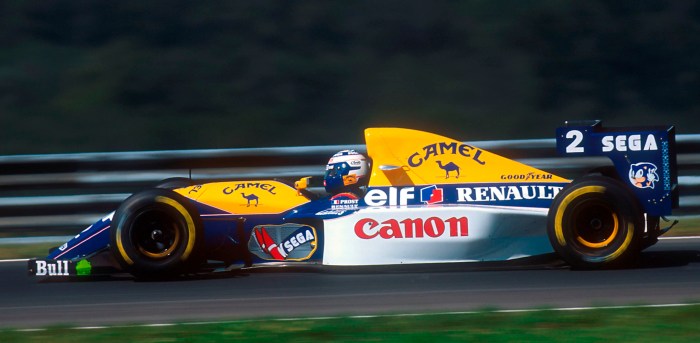
You won’t find a clutch pedal or gear stick in a Formula 1 car. Most teams are using computer controlled semi-automatic gearboxes. Two paddles mounted behind the steering wheel are used to change gears. An electronically controlled hydraulic system handles the operation of the engine revs, clutch and gear shift. This provides advantages in terms of reducing driver fatigue and improving the cars performance, as each gear shift can be executed in half the time of a conventional racing gearbox.
Other onboard, chip-controlled, functions include computer assisted steering and anti-lock brakes. Such features are now starting to become more prevalent in the standard offering of the mainstream car manufacturers. It is likely that, given the opportunity to evolve, today’s leading edge Formula 1 technology will filter through to the mass production end of the motor industry spectrum.
At an extraordinary meeting of the Formula 1 governing body, FISA (Fédération Internationale du Sport Automobile), in July this year, the rules were changed regarding many aspects of the current technology. As a result, the 1993 Australian Grand Prix will be our last opportunity to see active suspension, computer controlled ABS, traction control and computer-assisted power steering in a Formula 1 Grand Prix.
In an attempt to curb the current trend toward ‘computer age’ race cars, FISA has dealt a savage blow to the automotive industry as a whole by preventing engineers and computer professionals from expressing themselves in the harshest of automotive testing grounds — Formula 1.
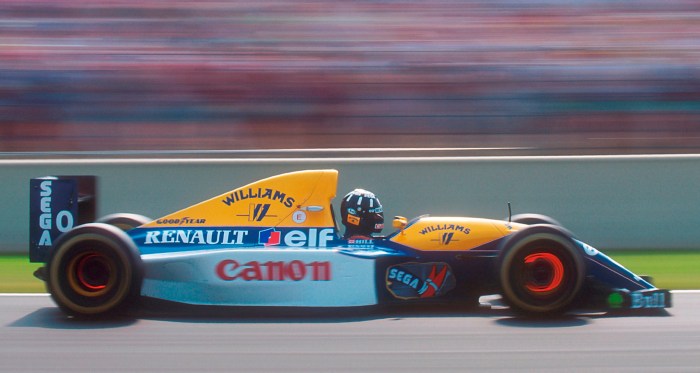
Despite attempts to limit the application of computer technology in Formula 1, Bull’s Centre for the Development of Artificial Intelligence and Renault Sport are working at a furious pace to assess the value of artificial intelligence in the development of systems to assist both engineers and drivers. Stage one, the extensive compilation of a knowledgebase from Williams, Renault and Elf engineers has recently been completed.
Perhaps what we will see in Adelaide on November 7 is not so much the end of an era in Formula 1, but the beginning of an exciting, new technology curve.
Patrick Faure, president of Renault Sport, obviously agrees when he says, ‘Engineers will always look to exploit any given technical regulations and go as far as possible in their individual domains.’
The author wishes to thank Williams Grand Prix Engineering Ltd and Renault Sport for their assistance in researching this article.
First published November 1993 – Your Computer Magazine.
On sale for a limited time! Ice Fortress (A Jack Coulson Thriller) by Robert B. Williams
 Noble Star Publishing